


Selfadvocatenet is in support Disability Day in Mourning on March 1st,2026
We self advocates mourning the losses of people with disabilities had been victims of filicide—those murdered by their family members or caregivers.
one that hits most us case of tracy Latimer was gassed by her father robert latimer 33 year to the day here some story from inclusion canada
- Surrey, BC: A local vigil is planned for March 1st.
- Montréal, QC: A local vigil is planned for March 1st.
- Virtual Vigil: ASAN will host a nationwide virtual vigil on Saturday, March 1st, for those who cannot attend in-person events.
- Candlelight Vigils: Traditionally, participants gather to light candles and read the names of victims to ensure they are not forgotten.
- Online Advocacy: Canadians often share remembrances using the hashtag #DisabilityDayofMourning to raise awareness of systemic violence against disabled individuals.
Important Distinction
Tracy Latimer: Now 30 Years Later

Tracy Latimer was killed 30 years ago today. Tracy was a vulnerable 12 year old girl who was killed by her father. In an act of discriminatory violence Robert Latimer sought to unburden Tracy of life with a disability. Canadians with disabilities were disturbed not only by Tracy’s murder and copycat crimes that followed it, but also by the public’s understanding and support of Robert Latimer’s actions.
In 2018, on the 25th anniversary of Tracy’s death, we at Inclusion Canada released a blog post that both honoured Tracy’s life and put into words how her death could inform then-emerging discussions about the legalization of medical assistance in dying (MAiD) for mature minors. Today, on the 30th anniversary of Tracy’s death, our concerns have only grown.
Five years ago, assisted death remained strictly an end of life option – a way for people whose deaths were “reasonably foreseeable” to be assisted to die peacefully. Now, five years later the law has been changed and assisted suicide is available to persons with disabilities whose deaths are not “reasonably foreseeable.”
Marginalized people who suffer because of systemic oppression and inadequate care are dying. Their suicidality is being endorsed and facilitated by the same state that is failing to meet their most basic needs. The same will soon (March 17, 2024) be true for persons whose “sole underlying medical condition” is a mental illness.
Therefore, in 2023, when elected officials discuss the prospect of legalizing MAiD for mature minors (the practice is not yet legal), they’re wrestling with whether or not to provide death by assisted suicide to minors with disabilities and mental illnesses who are not otherwise dying. This includes particularly at risk populations, like Indigenous youth.
A committee of MPs and Senators recently recommended making MAiD available to mature minors only in end of life scenarios. In doing so, they cited experts who said that this would be a first step in a “staged approach,” necessary to basically warm Canadians up to the idea of minors dying by MAiD.
Authorities are waiting for assisted suicide for mature minors with disabilities to feel right to Canadians. And we know from Tracy Latimer’s death that before long it likely will. It is our responsibility as individuals and as an informed collective to unpack our gut reactions and to recognize ableism when it shows its ugly face. So, just like in 2018, we’ll end this blog by asking “do we, as a country, like where we are headed?”
Five years later, we, at Inclusion Canada, can confidently say that we do not.
Here is more from the Canadian encyclopedia

Florence Girard
Name: Florence Girard.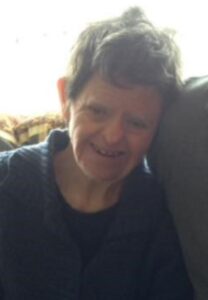
Died: October 13, 2018.
Age at death: 54.
Cause of death: Malnutrition.
Location: Vancouver, British Columbia, Canada.
Disability: Down syndrome.
Details:
In the care of a woman who neglected her, Florence grew steadily thinner until she finally starved to death, weighing only 56 pounds.
Florence was silly, boy-crazy, and liked having her picture taken. She competed in the 1993 Special Olympics. She was one of 14 siblings.
Case status:
Astrid Charlotte Dahl (Paid caregiver with Kinsight), convicted of failing to provide the necessaries of life, sentenced to 100 hours of community service and 12 months of probation. Sentence later increased to 15 months in jail, after Dahl had served 10 months of her conditional sentence and would have been released on good behavior anyway.
Source:
Independent review ordered into Community Living B.C. after starvation death
‘We failed her’: CEO apologizes as B.C. starvation inquest seeks pay boost for carers
High court replaces conditional sentence with jail term for B.C. caregiver in disabled woman’s death
Caregiver convicted in starving death of woman with Down syndrome avoids jail
Trial underway for B.C. caregiver charged with criminal negligence in woman’s death
Charge stayed against Coquitlam non-profit in starving death of disabled woman
UPDATE: Coquitlam non-profit, caregiver charged in starvation death of disabled woman
Charges laid after woman with disability found dead in B.C. caregiver’s home
Criminal neglect alleged after B.C. woman with developmental disability dies in care
Three charges, including criminal negligence causing death, laid in 2018 alleged starvation of Florence Girard
‘Unforgiveable’: Caregiver charged with criminal negligence, accused of starving woman to death
B.C. caregiver charged with criminal negligence has history of financial troubles
Website official one disability day of mourning go to the link here and well on picture below

Here list in Canada can see on


2026 Anti-Filicide Toolkit

Woodlands New Westminster
Inclusion BC
Institutions and People with Intellectual Disabilities


