


Selfadvocatenet.com in support of International Day for People with Disabilities on Dec 3rd,2024

This page selfadvocatenet with highlight importance of this day for people with disabilities ex knowledge good positive things self advocates have contributed to society . labeling we want to change we also want to highlight some of groups been in BC and well want to also highlight the issues we need keep working on . We are needing voice our concerns we as people have rights to we have keep up the good work disability community been working on our society needs change we request that respect dignity of those with disabilities are respected and onered ableism need to go we highlight why ableism discriminates people with disabilities
This Day is important cause People with Disabilities contribute to our society we want recognize our peers for what ever they participated in inclusion to make our society better place to live
Issues we as Self Advocates have are housing jobs, healthcare, access to information ,transportation ,income assistance and our services we use.
The theme for this year is
“Amplifying the leadership of persons with disabilities for an inclusive and sustainable future.
This theme recognizes the important role that persons with disabilities play in creating a more inclusive and sustainable world for all. It also emphasizes the importance of the participation of persons with disabilities in decision-making processes that affect their lives.
Statement by Prime Minister Justin Trudeau Govt of Canada

“One in four Canadians have a disability – many with disabilities that are not visible. Canadians of working age with a disability are nearly twice as likely to be living on a low income. That is unacceptable. That’s why, five years ago, we passed the Accessible Canada Act – a historic piece of legislation that is helping create a barrier-free Canada by 2040. And we’ve been moving forward with a lot more. In 2022, we launched the Disability Inclusion Action Plan. This Action Plan provides concrete programs and critical investments to help those with disabilities get financial security, find a good-paying job, and fully participate in their communities.
“As part of our ongoing work to support persons with disabilities, we’re on track to launch the Canada Disability Benefit in 2025, to provide direct support to over 600,000 working-age Canadians with disabilities. We’re also making life more affordable for persons with disabilities. By expanding the Canadian Dental Care Plan, we’re potentially helping up to 183,000 adults with a valid federal Disability Tax Credit certificate get access to affordable dental care. We’re also expanding the Disability Supports Deduction to include service animals, alternative computer input devices, work chairs, and bed positioning devices.
“Disability rights are human rights, and Canada has continually worked to protect and promote the rights of persons with disabilities around the world. This year marks six years since Canada acceded to the Optional Protocol to the United Nations Convention on the Rights of Persons with Disabilities as part of our unwavering commitment to providing equal opportunity for people with disabilities and protecting their dignity and independence. Moving forward, the Government of Canada will continue to take ambitious action to champion disability rights at international forums, including the United Nations.
“On this International Day of Persons with Disabilities, I invite all Canadians to celebrate the remarkable accomplishments of persons with disabilities. Let’s work together to make our country more inclusive and accessible for all.”
Statement by Premier of BC David Eby Govt of BC stay tune here
International Day of Persons with Disabilities B.C. Proclamation 2024

Dec 3rd International Day of Person with Disabilities Events 2024
BCPF Panel Presentation: International Day of Persons with Disabilities
Tue, Dec 03 2024 on Zoom

Time & Location
Dec 03, 2024, 3:00 p.m. – 4:00 p.m. PST Zoom
Do you want to learn from people with experience fighting for their rights in an ableist society? Do you want to hear from leaders of self-advocacy groups in BC?
Join our panel of experienced self-advocates for stories, advice, and a live Q&A about human rights, accessibility, the importance of International Day of Persons with Disabilities, and how society can better support people with intellectual or developmental disabilities.
We’ll hear from our panel members and have some time for questions and discussion at the end.
Tuesday, December 3, 2024 | 3:00pm – 4:00pm (Pacific Time) on Zoom.
Please register by December 1st. We will send an email reminder with the Zoom login information to all registered attendees the day before the event on December 2nd. (Check your promotions/junk folder if you don’t find it in your inbox this day or email us at hello@bcpeoplefirst.com to get the login link).
Panel members include:
Charlene Barney
Chelsea Rinquinha
Jo-Anne Gauthier
Nicole Jinn
Akshay Sachdeva
Bryce Schaufelberger


Thinking About Language PART 2. Words Matter. Words Have Power. The BC Self-Advocate Leadership Network Society’s Journey Through Thinking About Language

THINKING ABOUT LANGUAGE PART 3 WORDS MATTER WORDS HAVE POWER

United Nation 2024 International Day Of Persons With Disabilities (IDPD

- Quote from António Guterres

- In every community, people with disabilities are changemakers and peacemakers. They are also leaders. As we mark the International Day of Persons with Disabilities, let’s work with them to achieve an inclusive and sustainable future for all.
UN Secretary-General’s Report
In 2024, the Secretary-General submitted his fifth report on disability inclusion in the UN system. It reflects on the progress made to advance disability inclusion, highlights new or continuing challenges and opportunities presented through the Strategy’s implementation, and emphasizes key areas of focus needed to continue mobilizing the system towards an inclusive, accessible and sustainable world for all.

Health equity for persons with disabilities: guide for action
7 November 2024 | Publication
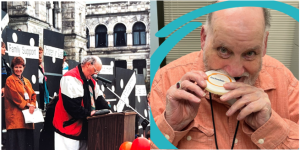
- On Dec 3, #IDPD, we celebrate Richard McDonald—a hero for inclusion. For 40+ years, he’s shared his experience of institutions, fueling the self-advocate movement. Richard, you’re a friend, teacher & beacon of possibility. Richard enjoying a cookie & rallying in 1999.
INCLUSION BC STORY ON INSTITUTIONS
The End of an Era
1878 – 1996
In the early afternoon of a rainy October day, the last two remaining residents of Woodlands institution moved to their new home in Vancouver’s Lower Mainland.
It was a quiet departure. No speeches. No television cameras. No crowds of supporters to wish them a fond farewell. But despite the lack of fanfare associated with their final moments in an institution that had been “home” for more than 25 years, it was an event that marked the end of an era in B.C.’s history.
The institutionalization of people with developmental disabilities in B.C. began at Woodlands more than 100 years ago. Together with Tranquille in Kamloops (which opened in 1959) and Glendale in Victoria (which opened in 1971) Woodlands became the focus of a major initiative in the early 1980’s to end the institutionalization of people with disabilities in B.C.
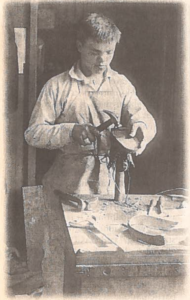
When downsizing began in 1981, approximately 1,600 individuals were living in the three institutions. Tranquille was the first to close its doors in 1985. Glendale followed early this spring. And with the closure of Woodlands in October, B.C. became the first province in Canada to make the full transition to community living.
“This is a truly historic occasion,” said Penny Priddy, Minister for Children and Families.
“Community Living helps to improve the quality of life of each individual,” she said, adding that “the benefits don’t stop with individuals. Diversity strengthens our communities.”
“The future success of community living goes beyond closing the institutions,”
Much of the success of the downsizing process has been attributed to the involvement of families in the planning and placement of their family members. In addition, attention was increasingly paid, throughout the process, to building a variety of crucial partnerships between ministry staff, service providers, community advocates, and institutional staff. The result was an initiative that sought not only to close the institutions, but to ensure the supports needed by individuals would be made available to them in the community. BCACL, which played an ongoing role in the downsizing process, will continue to monitor and advocate for appropriate services where required.
“The future success of community living goes beyond closing the institutions,” said BCACL President Anita Dadson. “Our job now is to make sure communities continue to have the resources they need to welcome and support people with developmental disabilities in their homes and in their neighbourhoods.”
“Say goodbye to Woodlands for me”
By Judy Carter-Smith
“Say Goodbye to Woodlands for me” were the words my mother said as I left her home to go to Woodlands on the day the last two people left. As I drove there, I thought of the many times my family and I had taken the same route to visit my sister or to pick her up to come home for the weekend – which we did every weekend for so many years.
Barbara, even through she was in Woodlands, was very much a part of our family and community life. We did grow up together thanks to the courage, stamina, and commitment of my parents and grandparents. There was never any question that as a family, we did whatever it took to support and advocate for Barbara. She has been living and working in the community for over 20 years now, and in a sense was one of the pioneers in the long journey which brought us to the day of closure.

So for me, this day held many personal memories as well as feelings related to my role at BCACL. I did not see the last two people leave. But as I looked around the deserted grounds and the empty buildings, I had a mixture of feelings. I felt a profound sense of history, of feeling close to the many people who had fought for this day. I thought about those families, like ours, for whom Woodlands was the only alternative at the time. I thought about how babies were taken from parents, who were told it was better if they never saw their children again, I thought about the dedication of some of the Woodlands staff, who were committed to doing their best at the time, and who formed lifelong relationships with individuals. I thought about some of the anxieties and fears we experienced, and I’m sure Barbara experienced, when we were fighting an inflexible bureaucracy and punitive attitudes.
I thought about all those individuals who are now in community, their journeys, and where it would take them. I thought of the challenges our community living movement will face in the future – to ensure people are of community not just in it, and to ensure institutions remain a part of our yesterday, and not part of our tomorrow.
Although our knowledge and experience has greatly increased since those early days when institutions were seen as the only alternative, attitudes and feelings that existed then are still with us. People are still afraid of people they perceive as different from themselves, resources are scarce, governments and ministries change.
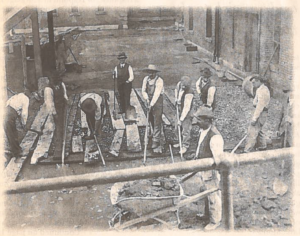 We have said goodbye to Woodlands and experienced our first day of an institution-free B.C. The strengths which brought us to this moment in time need now to be applied to ensuring that individuals are accepted as part of their community. As a self advocate recently put it, that “we have buddies”.
There is a new generation of individuals and families coming forward now who have never experienced institutions: children who have gone to regular schools and will have different expectations and responsibilities in tomorrow’s society. It is our challenge now to facilitate the bridge between generations and ensure the next generation is supported in achieving their goals by building on the heritage of the pioneers who came before.
Say goodbye to Woodlands and say hello to a different world. We will, like others before us, change the face of tomorrow today.
Take a moment to join us in reading this article from 1996 we’ve digitized about the end of institutions in our province, the impact it had made, and what it meant to people, families, and communities.
See the original newspaper article here
This is on Inclusion BC website go to the link here
Canada earns an “F” on addressing disability poverty
Disability Without Poverty and Campaign 2000 issue joint Disability Poverty Report Card highlighting failures of the federal government to end disability poverty and call for a strengthened Canada Disability Benefit
On the International Day of Persons with Disabilities, Disability Without Poverty and Campaign 2000 released their second annual 2024 Disability Poverty Report Card, assigning Canada an F, a failing grade, for its lack of progress in addressing poverty among people with disabilities.
This report card finds people with disabilities experience disproportionately higher rates of poverty. There is a trend across most indicators of rising poverty rates and deeper levels of poverty in 2021 and 2022 after significant reductions in 2020 due to steps taken during the pandemic.

International Day for Persons with Disabilities: Amplifying the leadership of persons with disabilities

Ross Chilton, CLBC CEO
A message from CLBC CEO Ross Chilton
The International Day of Persons with Disabilities (IDPD) is observed annually on December 3. The United Nations theme for this year is “Amplifying the leadership of persons with disabilities for an inclusive and sustainable future.”
This year’s IDPD theme recognizes the important role that people with disabilities play in creating a more inclusive world for all. It also emphasizes that people with disabilities must be at the table for decision-making processes that affect their lives.
Read more about International Day of Persons with Disabilities on the United Nations website here and find the official B.C. Government proclamation here.
In honor of the International Day for Persons with Disabilities, we invite you to watch the This Is Ableism video and attend the upcoming BC People First Panel Presentation on December 3 from 3:00pm to 4:00pm (PST). The event will feature self-advocates sharing their experiences and advice, as well as answering questions about human rights and accessibility. You can register for the BC People First event here.
As we celebrate this day, let’s remember the self-advocacy motto of ‘nothing about us, without us.’
Thank you to all of the individuals, family members, service providers, community groups, employers and many other British Columbians who make our communities stronger and more inclusive by celebrating the diverse abilities of all people.
The 50 – 30 Challenge: Your Diversity Advantage

Recognizing International Day of Persons with Disabilities
Canada’s new Medical Assistance in Dying (MAID) law
This is what we don’t want we want federal govt to halt the changes now People with Disabilities can be affected by assumptions to income needs to housing needs even just having a disability we request federal govt halt change consult those with disabilities input into so this time Self Advocates we must make a stand today is International Day for People with Disabilities
International Day for People with Disabilities 2024 Headlines
- Canadian Human Rights Commission report data showing troubling housing inequalities for people with disabilities

Accessibility Standards Canada publishes landmark standard on accessible employment
News release

December 3, 2024 Gatineau, Québec Accessibility Standards Canada
Accessibility Standards Canada (ASC) is pleased to announce today the release of the CAN/ASC-1.1:2024 – Employment standard. This equity-based standard on accessibility has been officially approved as a National Standard of Canada by the Standards Council of Canada (SCC).
This standard represents a significant step forward in promoting accessibility and fostering inclusion in workplaces across Canada. It provides organizations with practical guidance to proactively remove barriers in the workplace. It aims to enable people with disabilities to access more job opportunities, contribute fully to the economy, and thrive.
The standard addresses organizational policies, systems, and leadership. It focuses on key aspects of the entire employment lifecycle, including:
- recruitment,
- hiring,
- onboarding,
- retention,
- career development and promotion,
- performance management,
- redeployment,
- compensation; and
- job exit.
The development of this standard was led by ASC’s technical committee, which includes a majority of members who identify as persons with disabilities or as part of equity-deserving groups. Our technical committee members’ diverse lived experiences and expertise shaped the standard to address real-world barriers and deliver meaningful change for Canadians.
CAN/ASC-1.1:2024 – Employment aligns with SCC’s standards development organization requirements and guidance. This includes the involvement of a balanced committee of stakeholders, a rigorous public consultation, bilingual publication, and adherence to international standards development best practices.
The release of this standard reflects ASC’s commitment to developing world-class, equity-based standards that not only promote accessibility within Canada but can also serve as a model globally.
Quotes
“Employment was identified as a top priority for Canadians during consultations for the Accessible Canada Act and our 2020 public consultation. This standard is a direct response to that call. It’s designed to provide organizations with the tools they need to remove barriers and to promote equity and inclusion in the workplace. With support from our technical committee members, a vast network of stakeholders, diverse disability organizations and communities and experts, we are building a future where accessibility is the cornerstone of our workplaces and communities. We’re helping to build a stronger economy and a society where everyone can truly thrive.”
– Dino Zuppa, Acting Chief Executive Officer, Accessibility Standards Canada
Quick facts
- The CAN/ASC-1.1:2024 – Employment standard sets best practices for accessible employment. It directly supports the socio-economic inclusion of Canadians with disabilities. It also aligns with Canada’s Disability Inclusion Action Plan and the Employment Strategy for Canadians with Disabilities.
- The standard focuses on key requirements, such as:
- organizational policies and systems,
- culture, engagement, and education within the workplace,
- work disability management,
- accommodations,
- barriers encountered during recruitment, hiring and onboarding,
- barriers encountered in worker retention, professional development, pay equity (compensation), performance management, and job separation.
- The standard is available for free on our website. It is offered in English and French, and in HTML and Word formats. It is accompanied by a plain language summary in both languages and in sign languages.
- Accessibility Standards Canada’s standards are developed by technical committees of experts and individuals with lived experience, including at least 30% who are people with disabilities—currently exceeding 50%. Guided by the “Nothing without us” principle, these committees combine subject matter expertise with real-world perspectives to ensure accessibility needs are addressed. The public is also invited to provide input during the draft review process, making the standards truly inclusive and reflective of diverse needs.
- Accessibility Standards Canada is an accredited standards development organization with the Standards Council of Canada. It is mandated to create a barrier-free Canada by 2040. To achieve this, the organization develops and revises accessibility standards, advances accessibility research, and shares valuable information to support inclusion and equity.
Associated links
- CAN/ASC-1.1:2024 – Employment
- Accessibility Standards Canada
- Canada’s Disability Inclusion Action Plan – Canada.ca
- Employment Strategy for Canadians with disabilities – Canada.ca
- This is on govt of Canada website go to the link here
Statement by the Minister of Diversity, Inclusion and Persons with Disabilities, Kamal Khera on
International Day of Persons with Disabilities

December 3, 2024 Gatineau, Quebec Employment and Social Development Canada
The Minister of Diversity, Inclusion and Persons with Disabilities issued the following statement:
“Building a more inclusive and accessible Canada begins with the choices we make in our own communities. On the United Nations’ International Day of Persons with Disabilities (IDPD), we celebrate the progress made by, and for, persons with disabilities in breaking down barriers and advancing accessibility – in communities across Canada and beyond.
This year we’re proud to celebrate the 5th anniversary of the Accessible Canada Act – a landmark law aimed at achieving a barrier-free Canada by 2040. Since its passage, we’ve made significant progress, including creating Accessibility Standards Canada to develop national accessibility standards, and launching the Disability Inclusion Action Plan. This plan outlines concrete steps to ensure the needs of persons with disabilities are considered in everything we do, and challenging us all to do better as a country.
Since day one, our government has been working in partnership with Canada’s disability community in the spirit of “Nothing Without Us”. Together, we’re ensuring all Canadians have a voice in shaping the policies and initiatives that affect them, while strengthening our communities and our economy.
This year we’re proud to celebrate the 5th anniversary of the Accessible Canada Act – a landmark law aimed at achieving a barrier-free Canada by 2040. Since its passage, we’ve made significant progress, including creating Accessibility Standards Canada to develop national accessibility standards, and launching the Disability Inclusion Action Plan. This plan outlines concrete steps to ensure the needs of persons with disabilities are considered in everything we do, and challenging us all to do better as a country.
Our government is also moving forward on the implementation of the new Canada Disability Benefit (CDB) to support the financial security of working-age Canadians with disabilities. We are on track for eligible individuals to begin receiving their monthly payments in July 2025.
While the CDB marks a significant milestone, this is far from the end of our journey. We want to see the combined amount of federal and provincial or territorial income supports for persons with disabilities grow to the level of Old Age Security (OAS) and the Guaranteed Income Supplement (GIS). This benefit also builds on other important federal supports, including Canada’s new Dental Care Plan, with more than 57,000 eligible Canadians with disabilities having applied to date. We are also streamlining and simplifying the application process of the DTC application and making further investments to cover the costs so that all eligible Canadians can access the new CDB.
We are also committed to supporting Canadians with disabilities who are able and eager to work, helping them succeed and strengthen our Canadian workforce. This past summer, we launched the Employment Strategy for Canadians with Disabilities, aiming to close the employment gap between persons with disabilities and those without by 2040. By funding over 7,700 projects through the Enabling Accessibility Fund and investing $220 million annually in the Opportunities Fund for Persons with Disabilities and Skills for Success programs, we are also creating more accessible communities and workplaces, while supporting the hiring, retention, and career advancement of persons with disabilities.
Canada also continues to work with our allies to promote inclusion and accessibility around the world. At the first G7 Ministers’ Meeting on Inclusion and Disability, we signed the Solfagnano Charter, which aims to promote and safeguard the rights of persons with disabilities.
Today, let us take a moment to reflect on the valuable contributions of persons with disabilities in our lives, and on the collective efforts underway to build an inclusive, equitable and sustainable future where everyone has an opportunity to succeed.
Wishing everyone in Canada and around the world a very happy International Day of Persons with Disabilities!”
Associated links
- This is on Govt of Canada Website go to the link here
International agreement on the rights of disabled people
Easy Read version

What we did and what we learned: Monitoring Disability Rights
This report provides a plain language summary of what people shared during the public engagement process. This report has been translated and tested by People First of Canada’s plain language team. Self advocates from across the country provided their input, expertise, and experience to help make this report more accessible through plain language. It includes Sign language videos and closed captioning. It can also be read with a screen reader.

THIS SECTION IS TRAINING VIDEOS EXPLAINS WAYS CAN IMPROVE ON WHEN DEALING WITH DIVERSABILITES.
This video explains what ableism is. The video explains that the assumptions held regarding able-bodied superiority over persons with disabilities are learned beliefs that are continually reinforced through language. This video explains the ableism that can exist in everyday language and how they impact people with disabilities.
TO REFLECT ON
- What terms have you used that would be considered ableist or enforcing ableism?
- What did you learn about ableism?


