


Selfadvocatenet.com in support of International Day of Persons with Disabilities December 3rd,2025
This page will highlight the work that many contribution to advancement of people with disabilities in our society be included employment accessibility awareness self advocacy movement as we get to December 1st,2025
So what is International Day for People with Disabilities
The annual observance of the International Day of Disabled Persons was proclaimed in 1992, by the United Nations General Assembly resolution 47/3. The observance of the Day aims to promote an understanding of disability issues and mobilize support for the dignity, rights and well-being of persons with disabilities. It also seeks to increase awareness of gains to be derived from the integration of persons with disabilities in every aspect of political, social, economic and cultural life.
The main programme of the observance of the International Day of Persons with Disabilities at the UN Headquarters in New York will include the Opening, panel discussions and cultural events. Member States, civil society organizations and the private sector are welcome to organize their own events to celebrate the International Day to raise awareness and promote the rights and perspectives of persons with disabilities around the world.
2025 IDPD theme: “Fostering disability inclusive societies for advancing social progress”.
Top 30 Songs For Disabled People’s Rights


The Premier of BC David Eby ,will issue the following statement soon as its available
Statement by the Honourable Patty Hajdu, Minister of Jobs and Families and Minister responsible for the Federal Economic Development Agency for Northern Ontario, on International Day of Persons with Disabilities
December 3, 2025 Gatineau, Quebec Employment and Social Development Canada
The Minister of Jobs and Families and Minister responsible for the Federal Economic Development Agency for Northern Ontario issued the following statement:
“Creating a stronger, inclusive and barrier-free Canada is not just the right thing to do, it is how we make the economy work for everyone, and it begins with the choices and actions we make in our own communities.
On the United Nations (UN) International Day of Persons with Disabilities (IDPD), we join others around the world to celebrate the progress made by, and for, persons with disabilities and the on-going work to remove barriers.
This year, the UN theme for IDPD – “Fostering disability-inclusive societies for advancing social progress”– affirms our commitment to building a country where persons with disabilities can participate fully in society. Canada continues to support the UN Convention on the Rights of Persons with Disabilities (UNCRPD), and our inclusive approach to implementing the 2030 Sustainable Development Agenda for partnership, peace and prosperity for all people, now and across generations.
This past March was the 15th anniversary of Canada’s ratification of the UNCRPD and marked our second appearance before the UN Committee on the Rights of Persons with Disabilities. With the disability community’s vital partnership shaping our dialogue, the federal government remains focused on strengthening this collaboration and building on the progress made together.
Real challenges remain. Among Canadians with disabilities aged 15-64 who are not employed, over one million could work if they could access a fully inclusive labour market. To empower an inclusive economy that allows for the equitable participation of persons with disabilities, the federal government recently released the third annual update to the Disability Inclusion Action Plan and the first progress report of the Employment Strategy for Canadians with Disabilities. Guided by the principle of Nothing Without Us, the Strategy seeks to close the employment gap in Canada between persons with and without disabilities by 2040. This will build a workforce that is ready to meet the moment and protect the economy.
When persons with disabilities lead the way, our communities and workplaces become stronger, more compassionate and more just. That is how we build Canada Strong.
Wishing every Canadian and the global community a very happy International Day of Persons with Disabilities!”
Associated links
Contacts
For media enquiries, please contact:
Jennifer Kozelj
Senior Communications Advisor and Press Secretary
Office of the Minister of Job and Families and Minister responsible for the Federal Economic Development Agency for Northern Ontario
Jennifer.kozelj@labour-travail.gc.ca
343-540-6643
This is on Govt of Canada Website go to the link here
Statement by Minister Ali on the International Day of Persons with Disabilities 2025
December 3, 2025 – Ottawa, Ontario – Treasury Board of Canada Secretariat
The Honourable Shafqat Ali, President of the Treasury Board, made the following statement today:
“Today, on the International Day of Persons with Disabilities, we recognize the contributions of persons with disabilities across the federal public service and reaffirm our commitment to advancing accessibility. This day highlights that accessibility is not only a legal obligation, but a shared responsibility that strengthens our institutions and the services we deliver to Canadians.
I am also pleased to share the sixth annual update on Nothing Without Us: An Accessibility Strategy for the Public Service of Canada. This year’s update, titled Advancing employment for persons with disabilities: Progress update on the Accessibility Strategy (2025), highlights progress since 2019, including the hiring of nearly 7,000 persons with disabilities, surpassing our original commitment by 40%. Initiatives such as the GC Workplace Accessibility Passport are helping employees get the tools and supports they need to succeed in the workplace. The update points to the importance of using data and lived experience to guide decisions, measure progress and address persistent barriers.
While progress is evident, persons with disabilities remain underrepresented and workplace barriers persist. Continued leadership from deputy heads, combined with the collective efforts of all public servants, will be essential to advance the Accessible Canada Act, strengthen a culture of accessibility, and promote inclusion.
Our goal is ambitious but achievable, a barrier-free public service and a more inclusive Canada by 2040. When we work together on accessibility it benefits everyone, strengthens our institutions, and ensures we reflect the people we serve.
Contacts
Matthieu Perrotin
Director of Issues and Deputy Director of Communications
Office of the President of the Treasury Board
matthieu.perrotin@tbs-sct.gc.ca
Media Relations
Treasury Board of Canada Secretariat
Telephone: 613-369-9400
Toll-free: 1-855-TBS-9-SCT (1-855-827-9728)
Email: media@tbs-sct.gc.ca
This is on Govt of Canada website go to the link here
A study on the employment and wage outcomes of people with disabilities August 2024 from International Labour Organization

International Day of Persons with Disabilities: Time to build on the momentum of the Second World Summit for Social Development

Statistics Canada Released today
A government media release highlights the 2025 International Day of Persons with Disabilities, focusing on the experiences of disabled Canadians, with statistics on education, employment, and racialized persons with disabilities.


PRESS RELEASE:
Funding helps remove barriers for people with disabilities: Accessibility Projects Grants Recipients for 2025/2026
-For Immediate Release-
Vancouver, BC – December 3, 2025
In honour of December 3, International Day of Persons with Disabilities, Disability Alliance BC (DABC) has announced 11 recipients of the 2025/2026 Accessibility Projects Grants. These grants are expected to support year-long projects that promote better access to cultural, recreational, emergency planning, educational and community participation opportunities for people with disabilities across the province.
This year, the Province provided $450,000 in funding, which DABC will distribute to non-profits throughout British Columbia. Since 2018, DABC has distributed over $3 million to more than 100 non-profit organizations through the Accessibility Projects Grants.
“We all want people to live dignified lives and fully participate in their communities,” said Sheila Malcolmson, Minister of Social Development and Poverty Reduction. “That’s why we are funding $450,000 to support 11 projects that will expand accessibility and inclusion for people with disabilities in B.C., from creating accessible arts programs and digital literacy opportunities, to supporting youth, families, and Indigenous communities. Thanks to Disability Alliance BC for administering these grants and helping make these projects possible.”
In August 2025, organizations in B.C were invited to apply for up to $40,000 for projects that will support lasting change for the more than 900,000 people in BC[1] living with disabilities. After an extensive review process by representatives from the disability and community sectors, 11 projects were funded this year.
“It’s a joy being part of the selection process for these vital grants. The level of commitment to disability inclusion and community building shines through each application,” says Roberta McDonald, who is the Accessible Organizations Project Manager with DABC and has been on the grants review for the past two years. As a Deaf and neurodivergent accessibility professional, Roberta has devoted her career to removing barriers and building accessible communities. “I’m heartened by the incredible work towards accessibility happening across BC and can’t wait to see how these organizations contribute to making this a province where everyone can have full and equal participation at every level.”
DABC is proud to work with the Province of B.C. to remove barriers and celebrate the contributions of people with disabilities to their communities. The Accessibility Projects Grants are an important step in this direction.
A backgrounder can be found below with the list of the 2025/26 grant recipients.
Media Contact:
Helaine Boyd
Executive Director
Learn More:
To learn more about Disability Alliance BC: http://dabc.ca
To get up to date about the Province’s work on accessibility: https://www2.gov.bc.ca/gov/content/governments/about-the-bc-government/accessibility/news
To give feedback on barriers people with disabilities face when accessing government services: https://www2.gov.bc.ca/gov/content/governments/about-the-bc-government/accessibility/feedback
Backgrounder:
DABC invited eligible organizations to apply for funding for projects that will take place in 2026. The list of grant recipients was announced today:
- ACT Autism Community Training Society – Rural, Remote First Nations Communities: $40,000 for the Decolonizing Autism & Neurodivergence: Growing Strength based Inclusive Community in Rural, Remote, First Nations in BC Project. Increasing accessibility for Autistic and neurodivergent Indigenous people by creating culturally relevant and culturally safe training and sustained support systems.
- Cridge Centre for the Family – Victoria: $40,000 for the Visible Voices Project. Initiating a trauma-informed arts initiative for women survivors of brain injury, including those affected by intimate partner violence.
- Fresh Roots Urban Farm Society – Vancouver and Coquitlam: $40,000 for the Cultivating Accessibility: Expanding SOYL for Youth with Disabilities Project. Creating dedicated, accessible employment opportunities for youth with disabilities, empowering them to participate fully in food systems and urban agriculture.
- Grunt gallery – Vancouver and Richmond: $39,650 for the Blind-Led Tours Project. Establishing a transformative program of public tours designed for non-visual engagement and a professional development program to train Blind/low-vision individuals as gallery tour guides.
- Literacy Now Cowichan – Duncan and Cowichan Valley area: $23638.50 for the Digital Inclusion Pilot Project. Providing beginner level digital literacy training for adults with disabilities through small group classes and one-on one support, ensuring learners gain the foundational skills needed to navigate technology safely and confidently.
- Moms Against Racism Canada – Provincial: $40,000 for the NeuroEquity Project: Culturally Responsive Mental Health for Neurodivergent Communities. Addressing systemic barriers to timely and culturally appropriate mental health care for IBPOC (Indigenous, Black, and People of Colour) youth and adults with neurodevelopmental and intellectual disabilities.
- North Park Neighbourhood Association – Victoria: $40,000 for the Accessibility Champions: Civic Participation 2026 Project.
Delivering accessible civic education and governance pathways for disabled residents in North Park through accessible workshops, committee participation, and cross-stakeholder training.
- Okanagan Lifetime Networks Association – Okanagan: $37252 for the (ART) LIFT – Learning Independence for Future Transitions Project. Empowering individuals with disabilities aged 16–29 to develop financial, career, wellness, and community skills needed for a successful transition into autonomous adulthood.
- SPACE (Stuttering, People, Arts, Community, Education) – Lower Mainland: $40,000 for the Listening Equity Project. Training service providers to create accessible communication environments for people who stutter and those with other communication disabilities.
- Urban Horse Project Society – Burnaby and Langley: $40,000 for the Building Community Wellbeing Through Horses Project. Providing new accessible learning and wellness programs with horses to diverse urban adults, seniors and youth with disabilities.
- Zajac Ranch Society – Mission: $40,000 for the Zajac Ranch for Children Weekend Respite Family Camps Project. Offering Weekend Respite Family Camps throughout the off-season, designed to provide respite support, education and community connection to families and youth with complex medical conditions.
To learn more please visit here: https://disabilityalliancebc.org/program/accessibility-projects/
[1] 24.7% of BC’s population over age 15 have a disability: https://www150.statcan.gc.ca/t1/tbl1/en/tv.action?pid=1310037401&pickMembers%5B0%5D=1.13
Honouring lived experience: Q&A with Michelle Goos for International Day of Persons with Disabilities
As part of CLBC’s recognition of the UN International Day of Persons with Disabilities (December 3), we are highlighting the lived experience and leadership of one of our staff members Michelle Goos, CLBC Service Delivery Advisor. You can read more about CLBC’s Service Delivery Advisors here.
Michelle brings both professional expertise and personal lived experience as a parent with a disability. These insights deeply inform her work and contribute to our collective efforts to dismantle barriers and advance inclusion.
Interview with Michelle Goos, Service Delivery Advisor
Tell us about the project you’re presenting to the CLBC Board.
Michelle: I’m presenting my project on Parents Supporting Parents with Disabilities, which includes research, a literature review, and focus groups I’ve done with a CLBC colleague at the Canadian Institute of Inclusion and Citizenship. I also filmed part of my own story. Another former staff member will talk about being a stepdad with a disability. Minister Sheila [Malcolmson, Social Development and Poverty Reduction] will be there too.
What does the International Day of Persons with Disabilities mean to you?

Michelle: I don’t see myself as a disability first—I’m a mother, wife, sister, daughter, and aunt. The disability is just a label that helps me access what I need. I’m stronger than the label. I’d like to see people with disabilities highlighted all year—not just on one day.
Can you tell us about your family and your journey into parenting?
Michelle: I’ve been with my husband for 30 years, and we have a 27-year-old daughter who also has a diverse ability. When she was born in Surrey, there was a big nursing strike, and I didn’t feel supported. I didn’t know what resources I could ask for. We also couldn’t afford a private hospital room, so we kept getting moved around, and we didn’t have a car to bring the baby home. Those early days were stressful.
When we moved back to Victoria, I connected with a program called Parents Supporting Parents, which helps parents with disabilities find doctors, daycare, and navigate systems. That support made a huge difference.
What has becoming a parent meant to you?
Michelle: It’s been a journey with ups and downs. When you’re parenting with a disability, you always feel like you need to have “eyes on all four sides of your head” because you worry about child protection involvement. Some parents have had their children removed simply because of their disability. A lot of us are afraid to talk about needing help because we worry our kids will get taken away.
But my daughter has taught me so much. I’ve taught her too. I took her to free events, to Easter Seals camps, to youth programs that helped her feel confident. Seeing her grow into herself has been the best part.
What brings you the most joy in being her parent?
Michelle: Watching her thrive. She’s done Special Olympics swimming, won medals at the Summer Games, even swam up north in the ocean with a group called Spirit Orcas—no wetsuits! She’s worked for 10 years in a school cafeteria and now lives independently in low-income housing. I still worry, like any mom, but I’m really proud of how far she’s come.
What strengths do you bring to parenting?
Michelle: Honesty. I’ve always been upfront with her about money and choices. Instead of gifts, we’d have birthday parties so she could have memories with friends. We spent our time going to free festivals or concerts. I wanted her to have experiences more than things.
Who supported you as a parent?
Michelle: Early on, my mom and dad helped a lot. The Parent Support Program supported me too. Later, self-advocacy groups like Inclusion BC, Family Support Institute, and BC People First gave me a community where we could talk openly. Some parents would share their fears with me because they knew I understood.
What misunderstandings do people often have about parents with disabilities?
Michelle: A big one is people wondering why someone with a disability should have a child at all—how they’ll cope, how they’ll support themselves. I hear that especially toward single moms. Many parents also don’t know their rights in the hospital. Some stay in the hospital longer because staff don’t know what supports are available and won’t let them go home.
People don’t realize how much stigma still exists. Parents are scared to join parenting programs because they fear being judged or reported.
Do you think supports exist, but are not accessible?
Michelle: Yes. Supports are there, but not necessarily built for people with disabilities. Some parents can’t read or hear well; some need sign language or pictures. Some need 1:1 support. There’s not enough consistent connection between organizations and hospitals to help parents stay with their children. Those gaps leave parents vulnerable.
Have you had to advocate for yourself or your daughter?
Michelle: Many times. I had to advocate at school when her kindergarten teacher didn’t want her in the class. I advocated for myself with Person With Disabilities (PWD) assistance.. I’ve spent a lot of time in offices asking for help. It’s scary because you worry about backlash, but you still have to speak up.
What helps you stay confident when advocating?
Michelle: Knowing that if I keep talking about an issue, eventually someone listens. Even if I can’t fix it for myself, maybe it helps someone else later. That keeps me going.
What does inclusion mean to you as a parent?
Michelle: Being part of a community, being accepted, and being understood. Knowing I might take longer to do something, but I can do it. Inclusion is being seen for who you are, not just your disability.
How does it feel when your experiences as a parent with a disability are recognized?
Michelle: It feels honourable. It makes people pause and ask why this hasn’t been talked about sooner. We’re in the 21st century, yet parents with disabilities are still treated like we shouldn’t speak up. We’re human beings. We have rights.
What are your hopes for the future?
Michelle: More support for parents with disabilities, more understanding of our rights, more training for staff. I hope the next generation won’t struggle the way we did. We’ve made it this far. Now I want things to be better going forward.
What advice would you give to other parents?
Michelle: Believe in yourself. Find someone you can be honest with. Another parent, a group, even one trusted person. Parenting is hard for everyone. If you’re lucky enough to be a parent, it’s something to be proud of. It’s not an easy road, but the bumps are worth it.
Parents with disabilities raise children with love, creativity, and resilience-often while navigating barriers others never see. Every parent brings their own kind of strength, and every ability deserves to be recognized.
This ribbon stands for visibility, respect, and the belief that disability does not diminish parenting—it enriches it.
Thank you, Michelle, for sharing your story with such openness and strength. Your lived experience continues to shape CLBC’s understanding of how to better support parents with disabilities—and your voice is helping to create a more inclusive future for families across B.C.
To read more about Michelle’s work, visit the Canadian Institute for Inclusion and Citizenship website here.
Michelle was also one of the authors of the recent publication Parenting Experiences Among Adults With Intellectual Disabilities: A Scoping Review that can be found in the British Journal of Learning Disabilities here.
This is on CLBC Website go to the link here
Special Olympics BC athletes and programs advancing inclusion and social progress

International agreement on the rights of disabled people
Easy Read version

The Mission Self Advocacy Group made video on project with a grant from ESATTA.
Our group thank them for this we have produced this accessibility and awareness video from our group of amazing members ours

Thinking about Language. Words have Power Part 1,2 and 3


INCLUSION BC STORY ON INSTITUTIONS
The End of an Era
1878 – 1996
In the early afternoon of a rainy October day, the last two remaining residents of Woodlands institution moved to their new home in Vancouver’s Lower Mainland.
It was a quiet departure. No speeches. No television cameras. No crowds of supporters to wish them a fond farewell. But despite the lack of fanfare associated with their final moments in an institution that had been “home” for more than 25 years, it was an event that marked the end of an era in B.C.’s history.
The institutionalization of people with developmental disabilities in B.C. began at Woodlands more than 100 years ago. Together with Tranquille in Kamloops (which opened in 1959) and Glendale in Victoria (which opened in 1971) Woodlands became the focus of a major initiative in the early 1980’s to end the institutionalization of people with disabilities in B.C.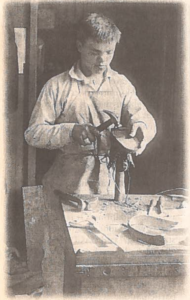
When downsizing began in 1981, approximately 1,600 individuals were living in the three institutions. Tranquille was the first to close its doors in 1985. Glendale followed early this spring. And with the closure of Woodlands in October, B.C. became the first province in Canada to make the full transition to community living.
“This is a truly historic occasion,” said Penny Priddy, Minister for Children and Families.
“Community Living helps to improve the quality of life of each individual,” she said, adding that “the benefits don’t stop with individuals. Diversity strengthens our communities.”
“The future success of community living goes beyond closing the institutions,”
Much of the success of the downsizing process has been attributed to the involvement of families in the planning and placement of their family members. In addition, attention was increasingly paid, throughout the process, to building a variety of crucial partnerships between ministry staff, service providers, community advocates, and institutional staff. The result was an initiative that sought not only to close the institutions, but to ensure the supports needed by individuals would be made available to them in the community. BCACL, which played an ongoing role in the downsizing process, will continue to monitor and advocate for appropriate services where required.
“The future success of community living goes beyond closing the institutions,” said BCACL President Anita Dadson. “Our job now is to make sure communities continue to have the resources they need to welcome and support people with developmental disabilities in their homes and in their neighbourhoods.”
“Say goodbye to Woodlands for me”
By Judy Carter-Smith
“Say Goodbye to Woodlands for me” were the words my mother said as I left her home to go to Woodlands on the day the last two people left. As I drove there, I thought of the many times my family and I had taken the same route to visit my sister or to pick her up to come home for the weekend – which we did every weekend for so many years.
Barbara, even through she was in Woodlands, was very much a part of our family and community life. We did grow up together thanks to the courage, stamina, and commitment of my parents and grandparents. There was never any question that as a family, we did whatever it took to support and advocate for Barbara. She has been living and working in the community for over 20 years now, and in a sense was one of the pioneers in the long journey which brought us to the day of closure.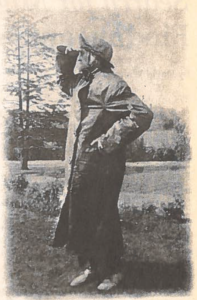
So for me, this day held many personal memories as well as feelings related to my role at BCACL. I did not see the last two people leave. But as I looked around the deserted grounds and the empty buildings, I had a mixture of feelings. I felt a profound sense of history, of feeling close to the many people who had fought for this day. I thought about those families, like ours, for whom Woodlands was the only alternative at the time. I thought about how babies were taken from parents, who were told it was better if they never saw their children again, I thought about the dedication of some of the Woodlands staff, who were committed to doing their best at the time, and who formed lifelong relationships with individuals. I thought about some of the anxieties and fears we experienced, and I’m sure Barbara experienced, when we were fighting an inflexible bureaucracy and punitive attitudes.
I thought about all those individuals who are now in community, their journeys, and where it would take them. I thought of the challenges our community living movement will face in the future – to ensure people are of community not just in it, and to ensure institutions remain a part of our yesterday, and not part of our tomorrow.
Although our knowledge and experience has greatly increased since those early days when institutions were seen as the only alternative, attitudes and feelings that existed then are still with us. People are still afraid of people they perceive as different from themselves, resources are scarce, governments and ministries change.
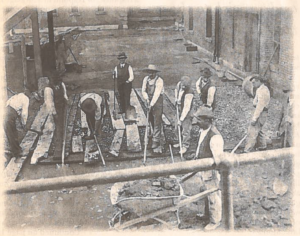 We have said goodbye to Woodlands and experienced our first day of an institution-free B.C. The strengths which brought us to this moment in time need now to be applied to ensuring that individuals are accepted as part of their community. As a self advocate recently put it, that “we have buddies”.
There is a new generation of individuals and families coming forward now who have never experienced institutions: children who have gone to regular schools and will have different expectations and responsibilities in tomorrow’s society. It is our challenge now to facilitate the bridge between generations and ensure the next generation is supported in achieving their goals by building on the heritage of the pioneers who came before.
Say goodbye to Woodlands and say hello to a different world. We will, like others before us, change the face of tomorrow today.
Take a moment to join us in reading this article from 1996 we’ve digitized about the end of institutions in our province, the impact it had made, and what it meant to people, families, and communities.
See the original newspaper article here
This is on Inclusion BC website go to the link here
Ableism and Language
This video explains what ableism is. The video explains that the assumptions held regarding able-bodied superiority over persons with disabilities are learned beliefs that are continually reinforced through language. This video explains the ableism that can exist in everyday language and how they impact people with disabilities.
TO REFLECT ON
- What terms have you used that would be considered ableist or enforcing ableism?
- What did you learn about ableism?
What is ableism? from United Nations Human Rights on Vimeo.


