


October 2026 has been proclaimed Community Inclusion Month in British Columbia, recognizing the importance of building communities where everyone has the opportunity to belong, participate, and thrive.
The proclamation is an important statement of what an inclusive province should look like: a place where everyone has opportunity, choice and control in their own lives, and where people with disabilities are welcomed as full and valued members of their communities.
But a proclamation is only the beginning.
The real work of inclusion happens every day.
It happens in neighbourhoods, workplaces, schools, homes, community organizations and public spaces. It happens when people with disabilities are welcomed as neighbours, co-workers, leaders, friends and decision-makers. It happens when barriers are removed, and people have meaningful opportunities to choose where they live, work, learn, spend their time and build relationships.
And it happens when we all recognize that we have a role to play.
Inclusion means more than being present
Community Inclusion Month is about more than ensuring people with disabilities are physically present in their communities. Inclusion means belonging, participation, choice and having a valued role.
For people with intellectual and developmental disabilities, inclusion can mean having a job that reflects their interests, strengths and skills. It can mean joining a recreation program, returning to school, attending a concert, volunteering, participating in cultural activities, building families or simply being recognized as an important part of the neighbourhood.
It also means having choice and control.
A truly inclusive community does not make decisions for people when they can make those decisions themselves. Instead, it creates the relationships, opportunities and supports people need to make their own choices and pursue the lives they want.
Making inclusion real
This is where Inclusion BC and communities across the province have an important role to play.
Inclusion BC works to advance inclusion by bringing people and organizations together around a shared vision: communities where people with disabilities belong, participate and have valued roles.
That work matters because exclusion is often created not by one major decision, but by the everyday barriers that can make participation difficult or impossible.
A community organization may not have considered how to make its programs accessible.
An employer may overlook the skills and contributions of a person with a disability.
A recreation program may unintentionally create barriers to participation.
A person may want to make new friends but lack the connections or supports needed to get started.
Making inclusion real means noticing those barriers and changing what we can.
It means asking:
Who is missing?
What barriers are getting in the way?
What can we change?
And, most importantly, have we asked people with lived experience what they want and need?
Community Inclusion Month gives British Columbians an opportunity to celebrate progress, recognize the contributions of people with disabilities and continue the work of building communities where everyone has a genuine opportunity to belong.
Because inclusion isn’t simply about opening the door.
It’s about ensuring everyone is welcomed, has a place and a say, and can help shape the community they call home.

Community Living Month 2026 in BC Events
Camp Luther Self Advocacy leadership Institute 2026 will be 25th Anniversary Year
 Join Speak Up Self-Advocacy Awareness – SUSA Society for Where We Belong, a two-day conference focused on community inclusion, self-advocacy, learning, and connection. Open to everyone, this event brings together self-advocates, families, service providers, and community members for networking, engaging presentations, and opportunities to celebrate inclusion.
The conference will feature a keynote speaker, a variety of presentations and sessions, meals and snacks on both days, and a marketplace showcasing community organizations and resources. October 6 and 7
 Kamloops United Church, 421 St. Paul Street, Kamloops, B.C.
See the full conference package, including the agenda, here:
To register or learn more, contact SUSA at 250-572-6009 or speakupkamloops@gmail.com

Mission Self Advocacy Group Burger and Beer Fundraiser October 24,2026


Working Together to Create the 2026–2029 CLBC Strategic Plan
Community Leadership is shaping the next CLBC Strategic Plan
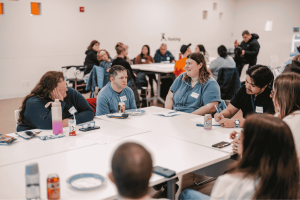
Aspire Richmond self advocacy group hosting an engagement session in Richmond, B.C.
As Community Living BC (CLBC) develops its new Strategic Plan to guide our work from 2026-2029, we want to thank the incredible community‑led leadership that made our recent engagement efforts so meaningful.
CLBC is extremely grateful for the work of leaders from self-advocacy groups, our 12 Community Councils, the Indigenous Advisory Committee and community and Indigenous partners who led engagement sessions.
Because of this collective effort, more than 1,100 people across British Columbia provided feedback.
There were 71-community led engagement sessions across BC, a public survey and targeted reach outs. More than 350 self-advocates and nearly 350 family members took part in these sessions.
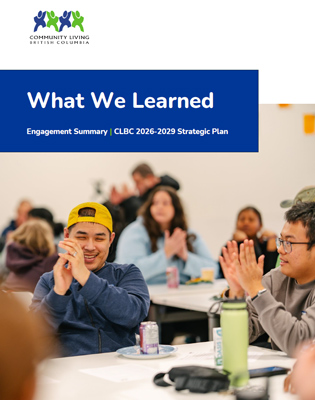
What We Learned: Strategic Plan Engagement Report now available
The What We Learned report collects and shares back everything we learned through our engagement process.
During the engagement there were seven themes that emerged. These themes are helping to inform CLBC’s new strategic plan and will guide how the organization sets priorities for the next three years.
- Communication was the most important issue raised. Across all groups, people said information from CLBC is sometimes hard to access, unclear, or not in plain language. People want proactive, consistent communication, provided in different ways.
- People want to understand decision-making that affects them. Clear, plain‑language explanations about eligibility and decision‑making help people understand who qualifies for services, why decisions are made, and why services are approved. This information supports informed choice, trust, and a stronger sense of fairness.
- People want to feel seen and heard. Relationships and presence matter. People want CLBC staff to know them and ask questions to better understand their situation.
- A lack of role clarity creates confusion. This includes CLBC’s role as an organization and the facilitator’s role as a main point of contact. People recognize that facilitators manage large and complex workloads but are often unclear about what facilitators can and cannot do.
- Cultural supports are essential to health and wellbeing. Indigenous participants and others emphasized that cultural identity and connection to culture helps people to feel a sense of belonging, safety, and healing. People called for Indigenous-led, culturally grounded supports to be built into services so the whole person is supported. They want CLBC to build connections with more Indigenous organizations and Nations and provide training to staff to advance culturally safe spaces.
- The transition from youth to adulthood is especially challenging. Families and people who receive CLBC services described this period of time as stressful and confusing, with major changes in support offered, system processes, and language used by different agencies. People want earlier, clearer, and more coordinated planning for this transition.
- Stronger coordination and liaison across government systems is needed. Many people experience gaps between CLBC, health, housing, and other government services. Challenges include inconsistent language, limited plain‑language materials, and difficulty navigating multiple systems.
What’s next?
All of this learning will inform a draft strategic plan, which will be brought to the CLBC Board for direction and approval. The final 2026–2029 Strategic Plan will be published late fall of 2026.
Visit this page for updates, including the upcoming publication of the 2026-2029 Strategic Plan.
The plan will also be shared on CLBC’s social media channels (Facebook, Blue Sky, Instagram) and in the CLBC Update for Individuals and Families.
We are proud of the collaboration that led to such strong participation and thoughtful contributions. It tells us that people care deeply about CLBC’s work and want to be part of strengthening how we learn, grow, and make a difference for the people we serve.
Do you have further questions? Email: CLBC.StrategicPlan@gov.bc.ca
What happens with your feedback?
Learn more about CLBC’s Strategic Planning Engagement Framework
Celebrate Diverse Abilities Magazine
 Welcome to the Spring 2026 Edition of CLBC’s “Celebrate Diverse ABILITIES” magazine.
Celebrate Diverse ABILITIES is created under the guidance of the CLBC Editorial Team, which is made up of self-advocates from across the province.
The theme for this edition is From Leadership to Community: Self-Advocacy Across B.C. It features stories of self-advocates and self-advocacy groups leading change in communities across British Columbia. From shaping CLBC’s next Strategic Plan and improving accessibility to serving on boards, mentoring others, and advocating for inclusion, these stories demonstrate the impact of self-advocate leadership. They highlight the importance of creating opportunities for people with lived experience to lead, be heard, and help shape more inclusive communities.
We always appreciate your feedback! Tell us what you think of Celebrate Diverse ABILITIES by sending an email to: CLBCInfo@gov.bc.ca.
If you would like to receive an email version of future editions, please visit the subscribe page.
If you’d like to read more great stories from self advocates across B.C., visit www.selfadvocatenet.com where new stories are published each week.
Enjoy!
This on CLBC website go to the link here

Spotlight what is Ableism


Read the Re-Imagining Community Inclusion (RCI) Report here

This month is an opportunity to highlight the ongoing leadership of CLBC’s 12 Community Councils working to promote culturally safe, accessible, and inclusive communities across BC. Councils help connect individuals and their families to information and resources, as well as take action that leads to social change and inclusive communities for all.
Learn how Council members are advancing inclusion and connection
Thanks to the dedication of our Community Councils, more cities across the province are recognizing and celebrating Community Inclusion Month this October.
- The City of Delta will illuminate City Hall in blue lights on October 1 in recognition of community Inclusion Month.
- City of Castlegar will illuminate the Kinnaird overpass lights for the month of October in recognition of Community Inclusion Month.
- City of Surrey has issued a proclamation recognizing October as Community Inclusion Month.
People on CLBC Community Councils include individuals and families who receive support from CLBC, service provider partners and community allies. These volunteers care about creating culturally safe, accessible and inclusive communities. Contact CLBC.Connect@gov.bc.ca to learn about volunteering on a Council in your community.
BC Self Advocate Leadership Network Society
Spotlight on Project called Thinking About Language. Words Matter. Words Have Power.
that was made by Self Advocates Members of BC SALN


Institutions Spotlight
Go to Inclusion BC for this below Here
The End of an Era 1878 – 1996
The following article was taken from Inclusion BC’s newsletter from Fall 1996 called Community Living News when Inclusion BC had the name of BC Association for Community Living (BCACL).
As Community Inclusion Month came to a close, we took a look through our archive to reflect on the progress made for inclusion in BC. Take a moment to join us in reading this article from 1996 we’ve digitized about the end of institutions in our province, the impact it had made, and what it meant to people, families, and communities
Institution Watch Inclusion Canada Newsletter on Institution

Spotlight
Celebrating Inclusion Film Fest
Speak Up Self-Advocacy Awareness (SUSA) Society Film Festival

The Mission Self Advocacy Group made video on project with a grant from ESATTA.
Our group thank them for this we have produced this accessibility and awareness video from our group of amazing members ours
Check out The Mission Self Advocacy Group website this video on go to the link here
Mission Self Advocacy Group Project joined with Essatta Group results of the World Cafe on Accessibility in Community Survey


Inclusion BC Accessibility Plan 2025-2029

Community Inclusion Month is more than a celebration; it’s also a call to action. Together, we share the responsibility of ensuring that every British Columbian can live a full, self-directed life, free from discrimination and exclusion. These are not just aspirations; they are human rights, protected in Canadian and international law, including the UN Convention on the Rights of Persons with Disabilities.
Throughout the month, Inclusion BC member organizations will be reaching out to local leaders and decision-makers to share community-based solutions that strengthen families, improve services, and deliver real results for people’s daily lives. These conversations are an important opportunity to work together to ensure fair access to community life.
We have developed concise, one-page summaries based on Inclusion BC’s position statements that can be mixed and matched to deliver a range of messages. These summaries are accessible, practical, and effective tools for advocacy. By focusing on a few key messages, recommendations, and plain language, the summaries are easier to share and reference in conversations with elected officials and community partners. The goal is to ensure our priorities are clear, actionable, and ready to use in meetings where time and attention are limited.
Access to Supports and Services for Children and Youth with Disabilities
Access to Housing for People with Intellectual and Developmental Disabilities
Access to Income Security for Adults with Intellectual and Developmental Disabilities
Access to Lifelong Learning for People with Intellectual and Developmental Disabilities
Access to Mental Health Care for Adults with Intellectual and Developmental Disabilities
Access to Mental Health Care for Children and Youth with Intellectual and Developmental Disabilities
For 70 years, Inclusion BC has worked alongside communities and governments to advance human rights, strengthen supports, and create opportunities for full participation in all aspects of life.
We thank our members, partners, and communities for joining us in building a stronger, more inclusive British Columbia.
Learn more about our Diversity Includes campaign and how you can be a Community Ambassador.


